


Common Bentley car problems Dubai owners ask about often begin with small signs: a Continental GT sitting unevenly after parking, a Bentayga air conditioner that struggles in traffic, an intermittent electrical warning or an unexpected change in braking feel. These symptoms can have several causes. A warning light or unusual noise is a reason to investigate, not proof that an expensive part needs replacing.
This practical guide explains seven Bentley Continental GT and Bentayga fault categories, the early signs to recognise, what a specialist workshop may check and which problems require immediate attention. The systems and components fitted to Bentleys differ by model year, engine, trim and generation, so the correct diagnosis must always be vehicle-specific.
Quick answer: If your Bentley has a red stop warning, rising engine temperature, leaking coolant, major loss of braking performance, severe suspension sagging or unstable handling, stop safely and arrange professional assistance or recovery. For less urgent symptoms—such as reduced AC cooling, a repeated amber warning or mild ride vibration—book a diagnostic inspection before the fault develops further.
Common Bentley car problems Dubai drivers should recognise early
Dubai’s high ambient temperatures, stop-start traffic, parking exposure and road conditions can place heavy demands on cooling systems, tyres, batteries and suspension. That does not mean every Continental GT or Bentayga will develop these faults. These are common types of complaints worth checking, not a model-year reliability ranking. Identifying the cause early may prevent unnecessary part replacement and a more expensive repair.
1. Air suspension sagging, uneven ride height or chassis warnings
Some Bentley models use electronically controlled air suspension to maintain ride height and ride comfort. A Continental GT or Bentayga that sits lower at one corner after an overnight stop, struggles to raise its height or shows a chassis warning needs a closer look. Possibilities include a leaking air spring or fitting, a pressure line, a valve block, a sensor, wiring or a compressor that cannot maintain pressure.
Warning signs: one corner noticeably low, an unusually long compressor run, a harsh ride, repeated levelling attempts or a suspension alert on the instrument cluster. If the vehicle is severely low, a tyre is rubbing or handling is affected, avoid driving.
Workshop approach: confirm the complaint on level ground, scan relevant suspension modules, compare height-sensor data, test for leaks and verify compressor performance. Replacing the compressor without checking for pressure loss can miss the real cause. Bentley technical guidance on air-spring fault finding also distinguishes a sagging vehicle from a confirmed failed air spring; see Bentley’s published air-suspension diagnostic communication.
If your Bentley is leaning after parking, explore our air suspension repair service in Dubai for diagnosis-first options.
2. AC cooling problems in Dubai traffic
Luxury-cabin comfort matters when temperatures rise. A Bentley’s AC may cool normally on the highway but feel weak while idling, or one cabin zone may be warmer than another. These differences offer useful clues. Potential causes include restricted airflow, a condenser or cooling-fan issue, a refrigerant leak, control-flap faults, sensors or compressor problems.
Warning signs: warm air at idle, weak airflow despite a high fan setting, inconsistent cooling between zones, unusual AC noises, or repeated loss of cooling after a refrigerant top-up.
Workshop approach: measure vent temperatures and system pressures, check condenser airflow and fans, inspect cabin filters and controls, and perform a proper leak test where appropriate. Repeatedly topping up refrigerant without finding a leak is not a lasting repair. For a vehicle-specific assessment, see our car AC repair and service in Dubai page.
3. Electrical warnings, battery drain and intermittent electronic faults
Continental GT and Bentayga models contain many electronic modules and comfort systems. Weak batteries, charging issues, poor connections and individual control-system faults can produce intermittent warnings or unexpected behaviour. A screen reboot, slow start or multiple alerts appearing together may point toward a voltage-supply concern—but none of these symptoms confirms the cause by itself.
Warning signs: difficulty starting, repeated low-battery messages, flickering displays, intermittent parking sensor alerts, electronic accessories not responding or several warnings after the car has been standing.
Workshop approach: test battery state and health, confirm charging output, check voltage supply and grounds, scan the affected modules and investigate excessive current draw only when testing supports it. Battery specifications and any required registration or adaptation depend on the vehicle. Do not reset or erase fault codes before they have been documented. Learn more about car electrical repair and diagnostics in Dubai.
4. Brake wear, squealing, vibration or changes in pedal feel
Heavy, powerful luxury vehicles place significant demands on their braking components. Noise alone does not prove brake failure; pad compound, moisture and surface conditions can affect sound. But grinding, vibration when braking, a change in pedal travel or reduced stopping confidence requires inspection. Some models and options use different brake systems, including carbon-ceramic components, so parts and procedures are not interchangeable.
Warning signs: high-pitched squeal that persists, grinding, steering-wheel shake under braking, a brake-wear message, pulling during braking or a soft or unusually firm pedal.
Workshop approach: inspect pad thickness, rotor condition, calipers, brake fluid, tyres and relevant ABS or electronic-brake faults. If braking performance is reduced, do not continue driving to the garage. Request a written assessment and correct parts specification before authorising replacements.

5. Engine overheating, coolant leaks or temperature warnings
Engine cooling deserves particular attention in hot-weather driving. Rising temperature, an unexplained coolant-level alert or visible coolant beneath the vehicle may involve a hose, reservoir, water pump, radiator, thermostat, fan or another cooling-system component. Symptoms vary widely among Bentley engine families and generations. Avoid assuming a diagnosis solely from whether a vehicle has a V8, W12 or hybrid powertrain.
Warning signs: temperature trending unusually high, coolant smell, repeated need to top up, a coolant warning, steam or loss of performance alongside a temperature alert.
Workshop approach: perform controlled cooling-system inspection and pressure testing when safe, review fault codes and fan operation, inspect hoses and fittings, and confirm any leaks before quoting repairs. Never open a hot coolant reservoir or keep driving an overheating engine. Arrange recovery when a stop warning or overheating condition is present.
6. Gearbox hesitation, harsh shifts or drivetrain alerts
A Bentley that jerks on a shift, hesitates to engage a gear or produces a drivetrain warning needs a careful roadworthiness assessment. An intermittent change in shift quality can have several possible explanations, including a control issue, software or adaptation concern, fluid condition, mounting or mechanical wear. The correct procedure depends on the specific transmission and model year.
Warning signs: delayed engagement, repeated rough shifting, unexpected slipping sensation, unusual transmission noise or a gearbox/drivetrain message. Do not keep testing an obviously failing transmission on the road.
Workshop approach: record when the symptom occurs, check stored fault codes and relevant live data, inspect for leaks, evaluate electrical and mechanical components and use the correct manufacturer procedures. A transmission replacement should not be the starting assumption without sufficient evidence.
7. Rough idle, misfires, oil leaks or reduced engine response
Rough running can have many causes, from ignition and sensor issues to air leaks, fuel-delivery problems and other engine faults. Small oil leaks can also develop at seals, covers or connections. Not every smell, vibration or change in response points to the same repair, and turbocharged and hybrid configurations require different checks.
Warning signs: persistent rough idle, hesitation under acceleration, a flashing engine warning, new oil spots, an oil-burning smell or unexplained loss of power.
Workshop approach: identify the exact fault codes, inspect for leaks, review engine data and use model-appropriate checks before replacing parts. A flashing engine warning, severe misfire, smoke or strong fuel smell should prompt a safe stop and professional advice rather than continued driving.
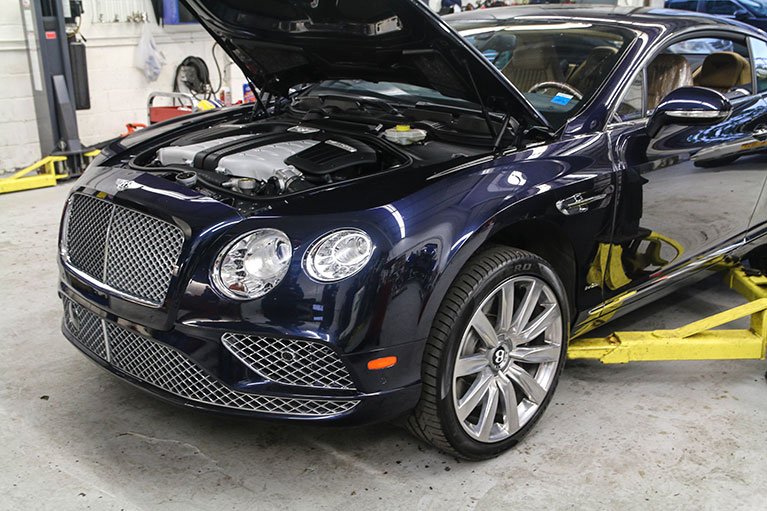
Bentley Continental GT versus Bentayga: which problems differ?
The Continental GT is a grand touring coupe, while the Bentayga is a luxury SUV. Both can have sophisticated electronics, performance engines and complex suspension systems, but the equipment, packaging and wear patterns depend on the exact specification. A fault documented on one generation should not be assumed to affect another. A Bentley Continental GT repair assessment may prioritise different checks than a Bentley Bentayga repair assessment even when the dashboard wording seems similar.
| Symptom | Possible issue to investigate | Next step |
|---|---|---|
| One corner sinks after parking | Air spring, air line, valve or sensor fault | Ride-height and leak inspection |
| AC warm when stationary | Cooling fan, condenser airflow or refrigerant-system concern | Pressure and airflow testing |
| Several electronic warnings | Voltage supply, module or wiring issue | Battery/charging test and scan |
| Grinding or vibration under braking | Pads, rotors, calipers or other brake components | Immediate brake safety assessment |
| High temperature or coolant smell | Cooling system fault or leak | Stop if overheating; inspect safely |
| Harsh or delayed gear changes | Control, electrical, fluid or mechanical concern | Transmission-specific diagnostics |
| Rough running or engine alert | Ignition, sensor, air/fuel or engine fault | Read codes and verify root cause |
How Dubai driving conditions affect Bentley maintenance
Understanding Common Bentley car problems Dubai drivers may encounter is useful, but preventing avoidable problems is just as important. High heat can increase AC load, frequent short trips can make battery management more demanding, and road dust can affect intake and cabin filtration. Yet an individual fault still needs inspection before anyone attributes it to Dubai’s climate.
- Monitor coolant and engine temperature: follow the owner’s manual for the correct coolant specification and never open a hot system.
- Check AC performance before peak summer: address reduced cooling or unusual noises before a long journey.
- Keep tyres correctly inflated: follow the vehicle’s specified pressures and inspect unusual shoulder wear or steering vibration.
- Respect scheduled maintenance: use the service plan for your exact VIN, age, mileage and engine configuration rather than a generic interval copied from another model.
- Do not ignore warning lights: photograph the exact message, note when it appears and have relevant faults read before codes are erased.
- Inspect brakes and suspension: have changes in ride height, braking feel or handling checked promptly.
- Keep records: retain service invoices, diagnostic findings and parts details so a later technician can understand the repair history.
Bentley emphasises vehicle-specific service procedures, specialist diagnostics and proper maintenance records in its official service and maintenance guidance. Exact schedules and component requirements should be confirmed against your vehicle documentation.
How are common Bentley car problems diagnosed in a specialist workshop?
An effective inspection does more than read a single fault code. When a Bentley Continental GT or Bentayga arrives with a complaint, a structured diagnostic process should include:
- Vehicle identification: confirm VIN, engine, model year, service history, installed options and the precise symptom.
- Safety assessment: decide whether the car is safe to drive, move within the workshop or requires recovery.
- Electronic scan: document stored and intermittent faults across relevant control modules, where equipment permits.
- Physical checks: inspect the affected components, including fluid levels, leaks, wear, wiring, sensors and applicable mechanical assemblies.
- Targeted tests: verify the likely cause with measurements—rather than replacing parts solely because a fault code names a system.
- Transparent quotation: explain confirmed findings, repair options, part choices and any calibrations required.
- Post-repair verification: check that the original symptom is resolved and any relevant fault or warning is no longer present.
For current symptoms, the appropriate next step is a Bentley repair inspection in Dubai. For scheduled servicing rather than an active fault, see our separate Bentley maintenance and service guide. Keeping these purposes separate helps owners find the right information without confusing routine maintenance with repair diagnosis.
How much does Bentley repair cost in Dubai?
Bentley repair costs vary with the specific model, engine, fault, access time, parts required and any coding or calibration after the repair. A simple sensor issue, an air-suspension leak, a compressor concern and a complete component replacement are not comparable jobs. A quotation should follow a proper diagnosis and make clear which work is necessary, which is preventive and which is optional. Be wary of estimates that promise a single price for all Continental GT and Bentayga years without inspecting the vehicle.
For regular servicing, oil, filters, inspections and fluid requirements depend on the service schedule. You can also explore major car service in Dubai to understand what a broader preventive inspection may include.
Frequently asked questions: common Bentley car problems Dubai
Are Bentley Continental GT and Bentayga repairs always expensive?
No single price covers every problem. Cost depends on the diagnosed fault, correct parts, labour and any specialist procedures. An early diagnostic check may help avoid replacing unrelated components, but it cannot guarantee a low repair bill.
Why is my Bentley Bentayga sitting lower on one side?
Possible causes include an air leak, suspension component, valve, sensor or control issue. A sagging vehicle does not automatically mean the air spring itself needs replacement. Avoid driving if the body is significantly lowered or a tyre is rubbing.
Why is my Bentley Continental GT AC not cooling properly in Dubai?
Reduced cooling can be linked to cabin airflow, condenser cooling, refrigerant pressure, a leak, a compressor or climate-control faults. Pressure and airflow testing are more informative than repeatedly adding refrigerant.
Can a weak Bentley battery cause several warning lights?
Low voltage can contribute to multiple electronic complaints, but warning lights can also indicate unrelated faults. Have battery condition, charging and module fault codes checked rather than assuming a new battery will solve everything.
Is it safe to drive with a Bentley engine temperature warning?
If the car is overheating, shows a stop warning or produces steam, pull over safely, switch off as directed in the owner’s manual and arrange assistance. Continuing to drive risks serious damage. Never open a hot coolant system.
How often should a Bentley be serviced in Dubai?
Follow the schedule for your precise VIN, generation, powertrain, age and mileage. Severe operating conditions may justify discussing additional checks with a qualified technician, but should not replace the manufacturer’s specified plan.
What should I tell a Bentley repair garage before booking?
Share the model, year, approximate mileage, exact warning message, when the issue occurs, any recent repairs and whether the vehicle can be driven safely. Photos or a short description can help prepare the inspection, though they cannot replace diagnosis.
Book Bentley Continental GT or Bentayga repair advice in Al Quoz, Dubai
If you are researching Common Bentley car problems Dubai because your vehicle has an active warning, a change in ride comfort or reduced AC performance, get the root cause checked before authorising parts. Spectrum German Auto Garage in Al Quoz Industrial Area 4, Dubai can discuss your Bentley’s symptoms and arrange a model-specific assessment.
Visit our Bentley Car Repair Dubai service page for the appropriate next step, or contact Spectrum German Auto Garage with your vehicle details to request an inspection and quotation. Early, accurate diagnosis is the best starting point for reliable repairs.
Need help with your car?
Talk to the Spectrum German Auto team in Al Quoz, Dubai.

