

Hidden chassis damage in used cars can be difficult to notice when a BMW, Mercedes-Benz, Audi, Porsche or Volkswagen looks immaculate in a Dubai showroom. Fresh paint, polished panels and a tidy interior tell you little about what happened to the vehicle in a previous collision. Before buying a used German car, learn how to distinguish routine cosmetic repairs from warning signs that warrant a professional structural inspection.
Quick answer: Check the VIN and available repair records, compare panel gaps and paint finishes in daylight, examine accessible mounting points and the underside, look for abnormal tyre wear, and arrange an independent pre-purchase vehicle inspection in Dubai before paying. None of these clues alone proves that a car has chassis damage; they help you decide what needs closer investigation.
In this guide: 9 warning signs · What to check before buying · Professional inspection · FAQs.
Why hidden chassis damage in used cars matters
A car’s structure supports its suspension, steering, passenger compartment and designed crash-management areas. In many modern German passenger cars, the body and structural underbody form a unibody rather than a separate ladder frame. People often use the word “chassis” to describe this wider structure, including chassis rails, pillars, sills, floor sections and suspension mounting areas.
For buyers concerned about hidden chassis damage in used cars, understanding the difference between cosmetic repair and structural repair is essential.
A damaged bumper or professionally repainted door is not the same as a bent structural member. The concern is an undisclosed or inadequately repaired impact affecting alignment, occupant protection, driving stability or resale value. An inspection should establish which part was repaired, how it was repaired and whether the repair is consistent with the manufacturer’s procedure.
9 warning signs of hidden chassis damage in used cars
1. Uneven gaps around the bonnet, boot and doors
Among the earliest visible clues of hidden chassis damage in used cars are gaps that differ from one side of the body to the other. Compare them carefully, but do not assume a misaligned panel always means a bent frame.
Stand at the front and rear of the vehicle in natural light. Compare the gap on each side of the bonnet, headlights, front wings, doors and boot. Look for panels that sit unusually high, rub on adjoining trim or need force to close. Inconsistent gaps may result from poor adjustment or panel replacement rather than structural distortion, but they are a sensible first clue to investigate.
2. Mismatched paint, texture or overspray
Fresh paint can conceal cosmetic work, but hidden chassis damage in used cars cannot be confirmed from colour differences alone. Focus on where the paintwork ends and whether supporting repair documents explain it.
View the body from several angles and compare colour, gloss, reflection and surface texture. Check rubber door seals, wheel-arch liners, edges of glass and plastic trim for paint overspray. A professional paint-thickness gauge can help identify refinish work, although aluminium, steel and plastic panels require different interpretation. Repainting alone does not establish hidden chassis damage in used cars.
3. Disturbed factory bolts and body seams
Inspecting body seams is useful when checking hidden chassis damage in used cars, especially around the engine bay and boot, where some impact repairs may leave visible evidence.
With the vehicle stationary, look for marked or repainted bolts at the bonnet hinges, front wings, doors and boot hinges. Compare visible seam sealer on both sides of the engine bay and inside the luggage compartment. An uneven seam, non-factory-looking sealant or tool marks can indicate previous work. Parts may also have been removed for ordinary repairs, so ask for supporting invoices rather than assuming the worst.
4. Suspicious repairs around rails, pillars or the boot floor
When investigating hidden chassis damage in used cars, examine both sides of the vehicle instead of relying on one suspicious mark. A qualified specialist can help distinguish factory seams from crash-related alterations.
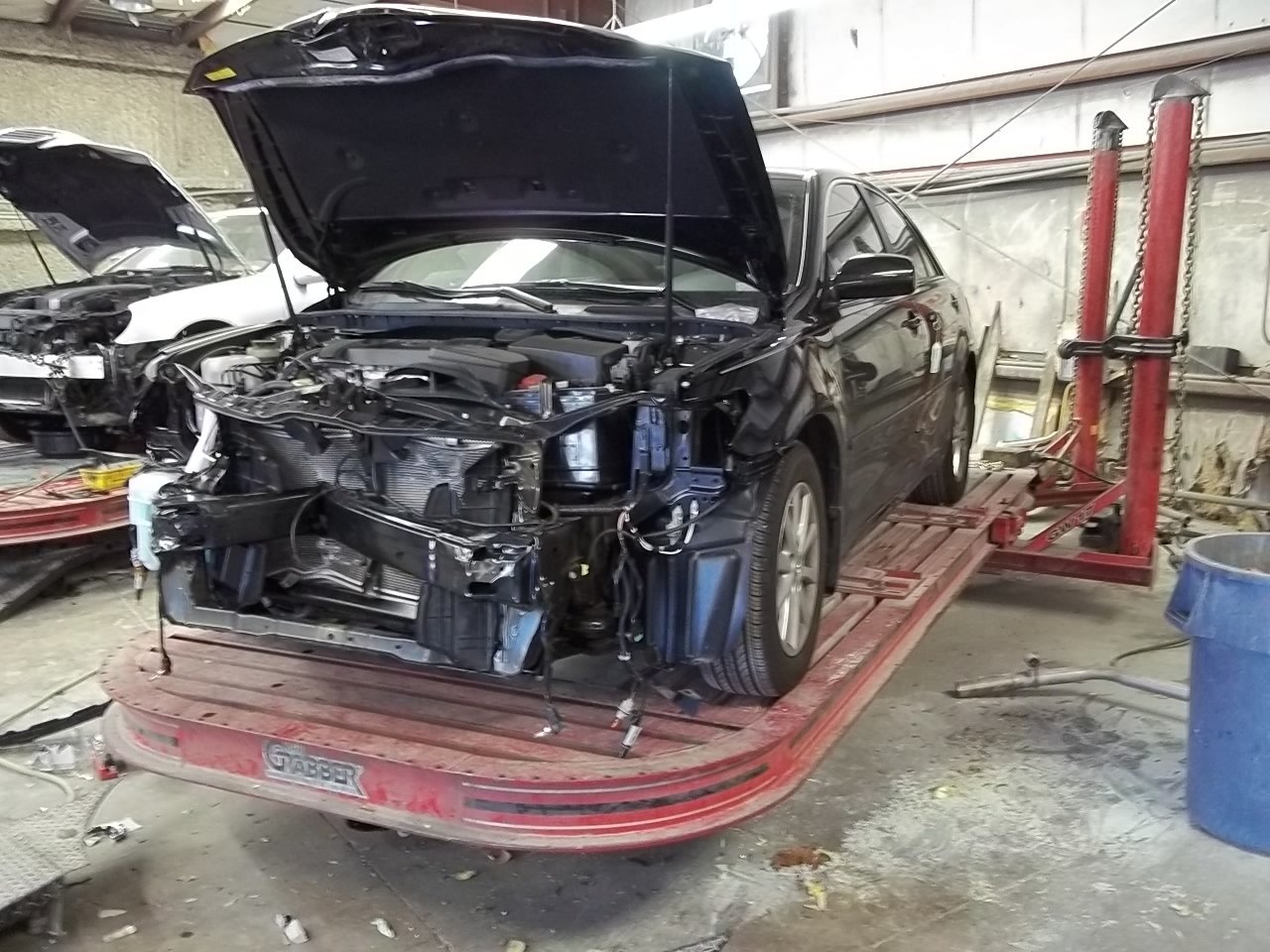
Pay special attention to visible chassis rails, strut towers, A-, B- and C-pillars, rocker panels or sills, and the boot floor. Buckling, creases, unexplained patches, unusual welds or damaged mounting points deserve specialist assessment. Structural repairs are a different category from a cosmetic bumper replacement. Do not attempt to crawl beneath a car that is not safely raised on proper workshop equipment.
5. Uneven tyre wear or a steering wheel that sits off-centre
Unusual handling deserves attention because hidden chassis damage in used cars may coexist with damaged suspension or mounting points. A trained technician needs to distinguish these possibilities from routine alignment problems.
Check all four tyres for irregular inner-edge or outer-edge wear. On a test drive, a car that drifts, needs constant steering correction or has an off-centre steering wheel could have alignment, tyre, suspension or structural issues. These symptoms do not prove an accident; they indicate that the suspension geometry and mounting points need checking.
6. One corner sits differently or suspension components look recently replaced
Compare the vehicle’s stance on level ground, taking account of loads and any adjustable air suspension. Unequal ride height, odd knocking sounds or evidence of fresh component replacement may justify a closer look. On BMW, Mercedes-Benz, Porsche and Audi models, sophisticated suspension systems can mask or complicate the causes of poor handling. Ask whether any suspension repairs followed a collision.
7. Warning lights or unexplained electronic faults
Electronic diagnostics can support an investigation into hidden chassis damage in used cars by identifying certain safety-system concerns, although they cannot reveal every physical repair.
Check whether airbag, stability-control, steering-assistance and other warning lights illuminate for their normal self-check and then go out. A workshop scan can reveal stored or current faults in accessible control modules, but clearing codes, changing modules or a lack of fault codes does not confirm an accident-free car. Any airbag or restraint-system concern should be assessed by a qualified technician.
8. Incomplete repair history or conflicting VIN details
Document checks are an important first step, yet hidden chassis damage in used cars can go unrecorded. A clean-looking history must never replace a careful physical inspection.
Ask for the Vehicle Identification Number (VIN), service invoices, previous inspection records and available accident-repair documents. Verify that the VIN on the vehicle matches its registration documents. For Dubai-registered vehicles, the Dubai RTA Technical Vehicle Status Report may provide useful historical information with the owner’s consent. Importantly, the RTA states that this report does not include vehicle accident data. Other available accident-record sources may also be incomplete, particularly for overseas or unreported damage.
9. A seller who refuses an independent inspection
If a seller will not allow a qualified workshop to assess hidden chassis damage in used cars, you cannot independently confirm the vehicle’s structural condition.
A seller unwilling to allow an inspection on a lift, a diagnostic scan or a reasonable review of repair history creates uncertainty. A refusal is not proof of a hidden accident, but you should not make a high-value decision without sufficient evidence. If the vehicle cannot be inspected independently, consider another car.
How to check a used German car in Dubai before paying
These steps help buyers assess the risk of hidden chassis damage in used cars without making assumptions based only on appearance.
Follow a practical sequence instead of relying on an attractive asking price or a quick test drive:
- Confirm identity: Compare the VIN with the documents and ask whether the vehicle is GCC-specification or imported.
- Request history: Obtain service records, invoices, prior repair explanations and any available official or overseas vehicle-history reports.
- Inspect in daylight: Photograph both sides, the bonnet, boot, door openings, wheel arches and visible engine-bay structure.
- Drive carefully: Note steering behaviour, noises, vibrations, braking response and warning lights; a short test drive cannot rule out structural damage.
- Book an independent inspection: Ask for body and paint checks, accessible underbody and mounting-point checks, diagnostics and a written summary. Where a measurement or specialised assessment is required, request it specifically.
- Decide from the evidence: Discuss any findings with the seller and avoid committing until significant structural concerns have been explained or resolved.
What a professional accident and chassis-damage inspection should assess
A proper assessment for hidden chassis damage in used cars should explain which components were accessible, what the inspector found, and where additional testing would be needed.
For buyers concerned about hidden chassis damage in used cars, a useful independent report should identify not only the defect but also its location and significance. Ask the inspector which checks are included, because a basic roadworthiness test and a detailed accident-damage assessment serve different purposes.
- Body and paint: Panel alignment, paint variation, signs of filler, overspray and fastener disturbance.
- Structural areas: Visible rails, pillars, sills, floor sections, seam sealer, welds and suspension mounting points.
- Underbody: Accessible crossmembers, shields, subframes and indications of impact or unauthorised modification.
- Steering and suspension: Tyre wear, ride height, obvious defects and alignment concerns.
- Electronics and safety: Applicable diagnostic trouble codes, dashboard warnings and restraint-system concerns.
- Documentation: Photographs, limitations of the inspection, recommended follow-up and any repairs that require a structural specialist.
Some findings require additional disassembly, vehicle measurements or manufacturer-specific procedures. A general visual inspection cannot certify that every concealed structural area is free from damage.
Does a repaired accident car always need to be rejected?
The answer depends on what was damaged and how it was repaired. Hidden chassis damage in used cars is a serious concern when the repair history is incomplete or the condition of safety-critical areas cannot be verified.
No. A transparent record of minor cosmetic repairs may be acceptable when the condition and price make sense. What matters is the location and severity of the damage, the quality and documentation of repairs and whether the vehicle remains safe and properly aligned. Undocumented work around critical structural or restraint-system areas should be treated differently from a painted bumper.
For a suspicious rail, floor section or structural joint, ask for an expert assessment before agreeing to purchase. You can learn more about the types of work involved on Spectrum German Auto’s chassis repair service page, but a repair service page is not a substitute for an independent buying decision.
German-car buyer’s checklist: save this before a viewing
Print or save the checklist so that checking for hidden chassis damage in used cars becomes a planned part of the buying process rather than an afterthought.
Use this quick checklist to reduce the chance of overlooking hidden chassis damage in used cars during a showroom visit.
- VIN on the car agrees with the registration documents.
- Service and previous accident-repair records have been requested.
- Panel gaps and paint finishes have been compared in good light.
- Bonnet, doors and boot open, shut and align consistently.
- No unexplained welds, creases or disturbed structural seams are visible.
- Tyres, steering and suspension show no unexplained warning signs.
- Relevant warning lights and electronic systems have been checked.
- An independent inspection is scheduled before final payment.
Frequently asked questions about hidden chassis damage in used cars
Can a car pass a registration test and still have previous accident damage?
Yes. A registration-related roadworthiness test and a detailed pre-purchase accident inspection have different scopes. Ask for a separate structural and bodywork assessment if previous collision damage is a concern.
Can paint thickness readings prove that a car has chassis damage?
No. Readings may suggest repainting or filler, but they cannot establish the condition of hidden structural members. Interpretation depends on material, factory finishes and prior repairs.
Can a VIN check reveal every accident in the UAE?
No. History records vary by source and may omit unreported incidents, private repairs or accidents before a vehicle was imported. Combine available records with a physical inspection.
Does uneven tyre wear always mean the chassis is bent?
No. Tyre pressure, wheel alignment, suspension wear and driving conditions can all cause uneven wear. The cause should be diagnosed rather than assumed.
Are used BMW, Mercedes-Benz, Audi and Porsche vehicles safe to buy after a minor accident?
A minor, properly repaired cosmetic incident does not automatically make a vehicle unsuitable. Evaluate the documented damage, repair method, safety systems and current condition. Seek specialist advice for any structural concern.
When should I arrange a pre-purchase inspection?
Ideally, after you have shortlisted the car and reviewed basic records but before final payment or ownership transfer. Confirm the inspection scope and any additional structural measurements in advance.
Get clarity before buying a used German car in Dubai
When you assess hidden chassis damage in used cars before payment, ask for clear evidence, photographs and a written explanation of any major concern rather than relying only on verbal assurances.
Spotting hidden chassis damage in used cars starts with asking better questions, not making quick judgments from polished paintwork. If you are considering a pre-owned Mercedes-Benz, BMW, Audi, Volkswagen, Porsche or another premium vehicle, arrange an inspection that addresses your specific concerns.
Spectrum German Auto Garage is based in Al Quoz Industrial Area 4, Dubai. To discuss the checks you need and request a quotation, visit our pre-purchase inspection service or contact the workshop. Ask about the availability and scope of any specialist chassis measurements before booking.
Need help with your car?
Talk to the Spectrum German Auto team in Al Quoz, Dubai.

